
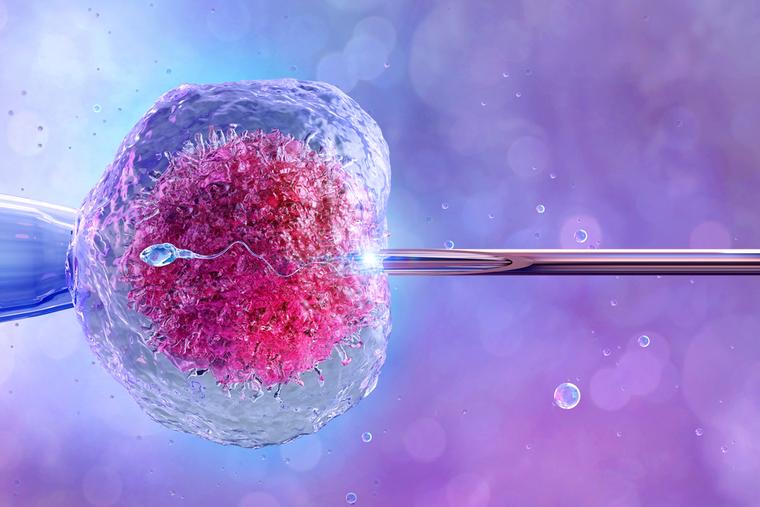
Embryo freezing (cryopreservation) is a well-established IVF technique that allows couples to store high-quality embryos for future use, significantly increasing overall success rates from a single egg collection cycle.
Advantages of Embryo Freezing
Surplus embryos can be frozen and transferred in a later, more favourable cycle — reducing both physical demands and financial cost. Freezing is also recommended when ovarian hyperstimulation syndrome (OHSS) occurs, when the uterine lining is suboptimal at the time of retrieval, when unexpected medical findings arise near transfer, or when fertility preservation is needed prior to cancer treatment. Frozen embryos may be stored for up to 5 years under Turkish legal regulations, with an annual storage fee applicable from year two.
How Are Embryos Frozen and Stored?
Embryos are mixed with a cryoprotectant solution, loaded into sealed tubes, and stored in liquid nitrogen at –196°C.
Thawing and Survival Rates
In a well-equipped laboratory under experienced embryologists — as at UCARER Women’s Health — the post-thaw survival rate is typically 75–80%. See our Frozen Embryo Transfer (FET) page for the full transfer process.
Safety
Research consistently confirms that congenital anomaly rates in babies born from frozen-thawed embryo transfers are not higher than those born from fresh cycles. Frozen embryo transfer is safe, effective, and cost-efficient.
To learn more about embryo freezing as part of your IVF journey, contact UCARER Women’s Health and book a consultation with Assist. Prof. Dr. Muzaffer Uçarer.