
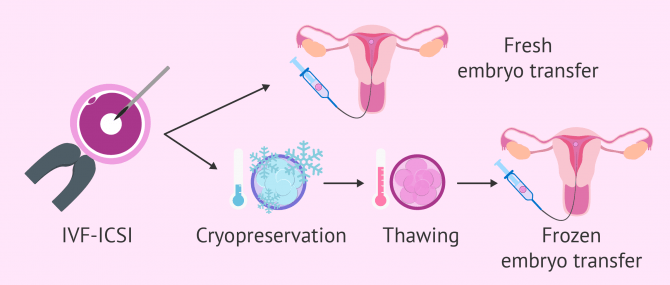
Frozen Embryo Transfer (FET) is the process by which embryos previously cryopreserved during an IVF cycle are thawed and transferred to the uterus in a subsequent cycle. FET offers couples an additional opportunity to achieve pregnancy from a single egg collection — without repeating the full stimulation process.
Why Choose FET?
FET is recommended when good-quality embryos remain following a fresh transfer, when the fresh cycle was cancelled due to OHSS or endometrial issues, or when a couple wishes to extend their family at a later date.
The FET Process
The endometrium is prepared either naturally or with hormone support. Once the lining reaches optimal thickness (typically 7mm+), the embryo is thawed, assessed for viability, and transferred under ultrasound guidance using a fine catheter. The procedure takes 15–20 minutes and requires no anaesthesia.
Success Rates
In a well-equipped laboratory, 75–80% of frozen embryos survive thawing. Pregnancy rates from FET are comparable to — and in some cases exceed — those from fresh transfers, as the uterine environment is often more receptive following a rest cycle.
To discuss Frozen Embryo Transfer as part of your fertility journey, book a consultation with Assist. Prof. Dr. Muzaffer Uçarer at UCARER Women’s Health.