
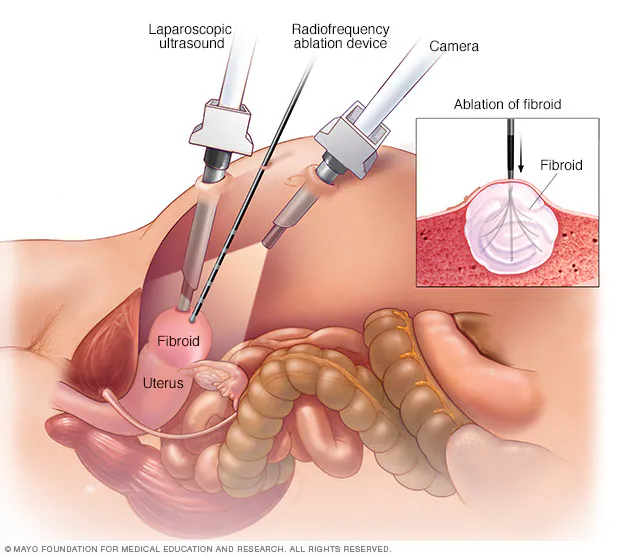
What Are Fibroids?
Fibroids are small growths that can develop in and around the womb. They consist of fibrous tissue and muscle formations developing within or around the uterus. The condition appears connected to estrogen levels, with growths typically emerging between ages 30-50. Risk factors include being overweight or of African-Caribbean descent.
Symptoms
Individuals with substantial fibroid growth may encounter heavy or painful menstrual periods, abdominal discomfort, lower back pain, sexual discomfort, constipation, or frequent urination. Smaller growths often produce no noticeable effects.
Diagnostic Methods
The diagnostic approach involves symptom assessment, pelvic examination, ultrasound imaging to visualize uterine growths, and potentially hysteroscopy or laparoscopy procedures. These diagnostic tools help distinguish fibroids from other conditions.
Treatment Approaches
Management strategies range from observation to medication for symptom relief, medication to reduce fibroid size, and surgical removal when necessary. Treatment selection considers fertility implications, as fibroid location and dimensions may affect pregnancy outcomes.
Surgical Treatment Options
Medical management — Hormonal treatments to reduce fibroid size and control symptoms, typically as a pre-surgical measure or for patients not yet planning surgery.
Hysteroscopic removal — Minimally invasive removal of submucosal fibroids (those inside the uterine cavity) via the cervix, with no abdominal incisions and rapid recovery.
Laparoscopic or open myomectomy — Surgical removal of intramural or subserosal fibroids through keyhole or open abdominal approaches, preserving the uterus for future pregnancy.